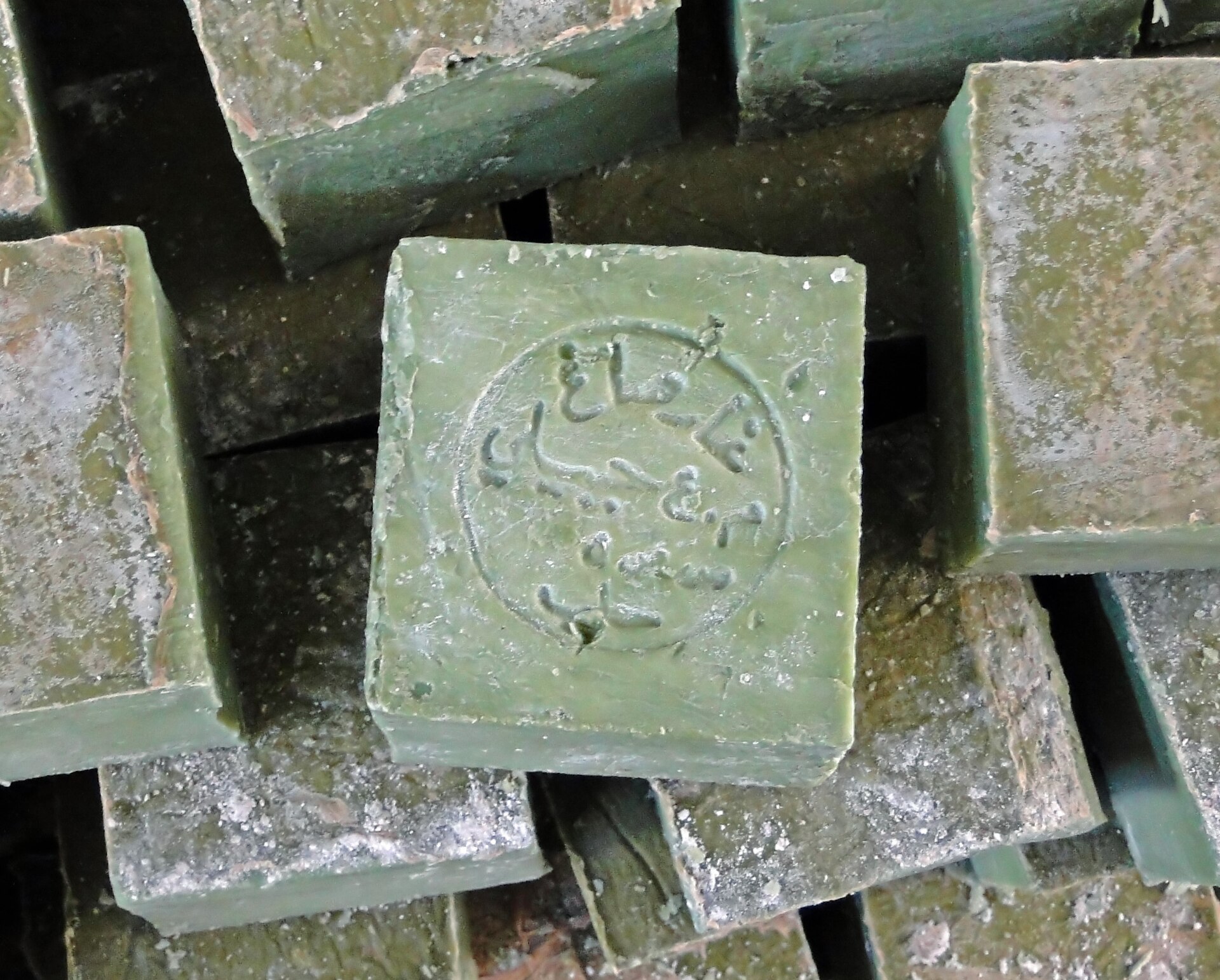
© Wikimedia Commons, CC BY-SA 3.0
Laurel soap & perfumery
صابون الغار والعطور
Syria's aromatic heritage is deeply rooted in its ancient craft of laurel soap making and perfumery, embodying centuries of tradition and natural elegance.
Story & history
The story of Syrian laurel soap, often called Aleppo soap, stretches back millennia, possibly originating with the Phoenicians. This ancient bathing tradition was passed down through generations, utilizing the region's abundant olive oil and laurel berry oil. Historically, large caldrons would simmer for days, transforming these natural ingredients into a solid, cleansing bar, revered for its purity and skin-benefiting properties.
Alongside soap, the art of perfumery, particularly with the exquisite Damascene rose and various attars (essential oils), flourished. Ancient Syrian perfumers were masters of distillation, capturing the essence of flowers, woods, and spices to create fragrances that adorned palaces and permeated daily life. These crafts are not merely products; they are living testaments to Syria's rich cultural tapestry and its profound connection to nature's bounties.
How it's made
Laurel soap is traditionally made through a hot process called saponification, where olive oil and laurel berry oil are heated slowly in large vats with lye (sodium hydroxide and water). This mixture is then cooked and stirred for many hours or even days until it thickens. After cooking, the soap is poured into large molds, left to cool and set, then cut into individual blocks and stacked in specific patterns for air-drying. This drying process can take several months to over a year, allowing the soap to fully cure, harden, and develop its distinctive green exterior and amber interior. Perfumes are created using age-old distillation techniques to extract essential oils from botanicals like the Damascene rose, jasmine, and various spices, which are then carefully blended to achieve unique aromatic profiles.
Materials & techniques
- Olive Oil (Zayt Zaytoon)
- Laurel Berry Oil (Zayt Ghar)
- Water (Ma')
- Lye (Qily)
- Damascus Rose Petals (Warrad Shami)
- Aromatic Botanicals (Nabatat Atriyah)
Where to find it
Cultural significance
These crafts are more than just commodities; they are cultural symbols of Syrian ingenuity, purity, and connection to its natural landscape. Laurel soap is renowned worldwide for its gentle, moisturizing properties and is a testament to sustainable, artisanal production. Perfumery, particularly with the iconic Damascene rose, represents the sophisticated artistry and profound sensory heritage of the region, embodying centuries of tradition and natural elegance. Both crafts are deeply interwoven with Syrian identity and serve as tangible links to its ancient past.
Artisans
No artisans published for this craft yet.
Workshops
No workshops published for this craft yet.
Visitor experiences
- Visit a traditional soap workshop in Aleppo to witness the ancient craft of laurel soap making, from cooking the oils to cutting and drying the final bars.
- Explore the souks of Damascus to discover artisan perfumeries, where you can find exquisite attars derived from local flowers and spices, especially the Damascene rose.
- Participate in a guided tour that explains the historical significance of these aromatic products in Syrian culture and daily life, perhaps with a soap-making demonstration.
Handmade products
No products listed for this craft yet.