© Dalil Syria
Copper & metalwork
نحاسيات ومعادن
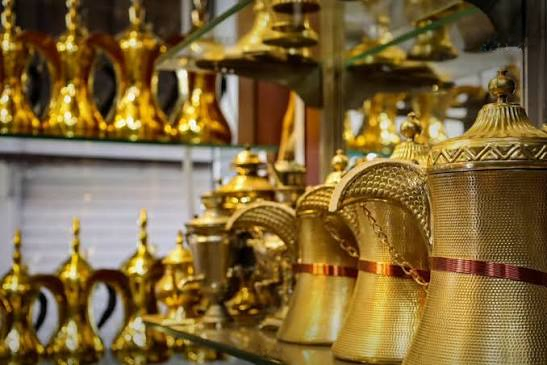
Syrian copper and metalwork represents a timeless art form, blending utilitarian function with exquisite decorative beauty. From hammered pots to intricately engraved trays, these crafts are a testament to centuries of artisanal skill.
Story & history
The history of metalwork in Syria stretches back millennia, with evidence of sophisticated techniques dating to ancient civilizations. Throughout various historical periods, including the Roman, Byzantine, and Islamic eras, Syrian artisans continuously refined their skills, adapting new methods and motifs.
The Mamluk and Ottoman periods, in particular, saw a flourishing of metalwork, especially in brass and copper. Guilds of master craftsmen produced magnificent pieces, ranging from household items to elaborate mosque decorations, often featuring intricate geometric patterns, calligraphy, and figural representations before the advent of aniconism. This rich legacy continues to inspire modern artisans, who often employ techniques passed down through generations.
How it's made
The creation of metalwork involves several distinct processes. Hammered copper (Naḥḥās) typically begins with flattening metal sheets, then shaping them using mallets and various anvils, followed by annealing to prevent cracking. Engraving (taḥfīr) or chasing (tafrīgh) involves precise tools to cut or press patterns onto the surface. Damascus steel, famed for its wavy patterns (Muqaddara), was historically created through a complex forging process of combining different steels, yielding blades of exceptional strength and sharpness. Traditional methods prioritize handcraftsmanship over machinery, ensuring each piece is unique.
Materials & techniques
- Copper (Naḥḥās): Widely used for household items, decorative trays, and traditional coffee pots.
- Brass (Ṣufr): Often employed for intricate engraving, decorative lamps, and ceremonial objects.
- Damascus Steel (Fulādh Dimashqī): Historically used for legendary blades known for their strength and distinctive patterns.
- Tin (Qaṣdīr): Applied as a lining for copper cookware, providing a non-reactive surface for food.
- Silver (Fiḍḍa): Occasionally used for inlay work or small, highly detailed decorative elements on more luxurious pieces.
Where to find it
Cultural significance
Syrian copper and metalwork carries profound cultural significance, embodying traditional hospitality and artistic expression. These pieces are not merely decorative; they are functional heirlooms, often passed down through families, symbolizing continuity and heritage. They reflect the ingenuity and aesthetic sensibilities of Syrian artisans throughout history, connecting the past to the present through enduring beauty and craftsmanship.
Artisans
No artisans published for this craft yet.
Workshops
No workshops published for this craft yet.
Visitor experiences
- Visit the artisan souqs (markets) in the Old City of Damascus or Aleppo to observe master craftsmen at work, hammering and engraving metal.
- Purchase a unique, handcrafted copper or brass piece, such as a tray, lamp, or coffee pot, as a lasting souvenir of Syrian craftsmanship.
- Explore museums with collections of historical metalwork to appreciate the evolution of designs and techniques over centuries.
Handmade products
No products listed for this craft yet.