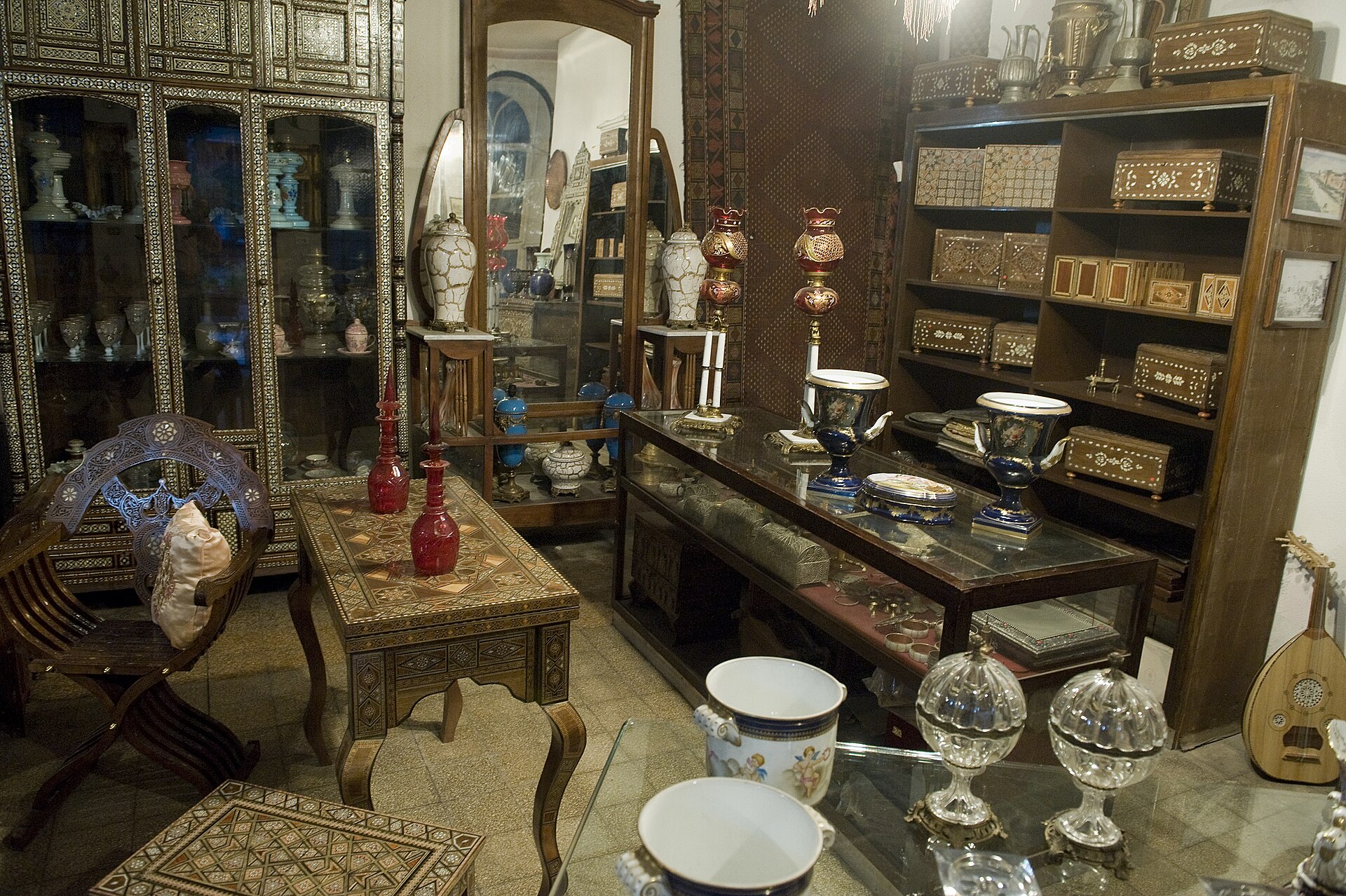
© Bernard Gagnon / Wikimedia Commons, CC BY-SA 4.0
Textiles & brocade
نسيج وبروكار
Syrian textiles, renowned for their intricate designs and luxurious materials, represent centuries of artistic tradition and skilled craftsmanship. From the opulent Damascene brocade to the delicate Aghabani embroidery, these fabrics are a testament to Syria's rich cultural heritage.
Story & history
The history of Syrian textiles is deeply intertwined with the Silk Road, which facilitated the exchange of weaving techniques and luxurious materials across continents. Damascus, in particular, became a prominent center for silk weaving and brocade production, attracting artisans and merchants from afar. The city's master weavers developed unique patterns and methods, making Damascene brocade highly sought after by royalty and elites across the globe.
Beyond brocade, Syrian craftsmanship also flourished in other textile arts. Aghabani embroidery, characterized by its vibrant silk threads on fine cotton or linen, emerged as a distinct Damascene tradition. Dima weaving, originating from the village of Dima near Damascus, is another testament to Syrian ingenuity, producing durable and beautifully patterned cotton and silk fabrics, often used for traditional attire and household items.
How it's made
The creation of Syrian textiles is a labor-intensive process, often employing traditional hand looms for brocade and Dima weaving. Master weavers meticulously interlace silk, cotton, or metallic threads to form complex patterns, sometimes taking weeks to complete a single piece. Aghabani embroidery involves skilled artisans hand-stitching intricate motifs onto fabric, often using stencils to guide their detailed work. The precision and artistry involved in each stage reflect generations of passed-down knowledge.
Materials & techniques
- Silk threads
- Cotton fibers
- Metallic threads (gold, silver)
- Linen
- Natural dyes
Where to find it
Cultural significance
Syrian textiles are more than mere fabrics; they are cultural ambassadors, carrying stories of ancient trade routes, artistic innovation, and communal identity. Historically, these textiles symbolized status and wealth, adorning palaces and nobility. Today, they remain a vital part of Syria's intangible cultural heritage, reflecting the enduring skill and creativity of its people. Preserving these crafts is crucial for maintaining a link to the past and inspiring future generations of artisans.
Artisans
No artisans published for this craft yet.
Workshops
No workshops published for this craft yet.
Visitor experiences
- Visit traditional souks in Damascus to admire and purchase authentic Damascene brocade and Aghabani embroidery.
- Attend a workshop (if available) to learn basic weaving or embroidery techniques from local artisans.
- Explore museums exhibiting historical Syrian textiles to understand their evolution and cultural significance.
Handmade products
No products listed for this craft yet.