“City of the citadel, soap, and silk-road souqs.”
- Province
- Aleppo Governorate
- Population
- ~1.9 million
- Climate
- Continental: hot dry summers, cold wet winters.
- Best Time
- April–June and September–October.
Today's weather — Aleppo
Overview
History
Highlights
- Aleppo Citadel
- Great Mosque of Aleppo
- Al-Madina Souq
- Khan al-Wazir
- Christian Quarter of Al-Jdayde
- Aleppo Soap workshops
Major Attractions
Citadel of Aleppo
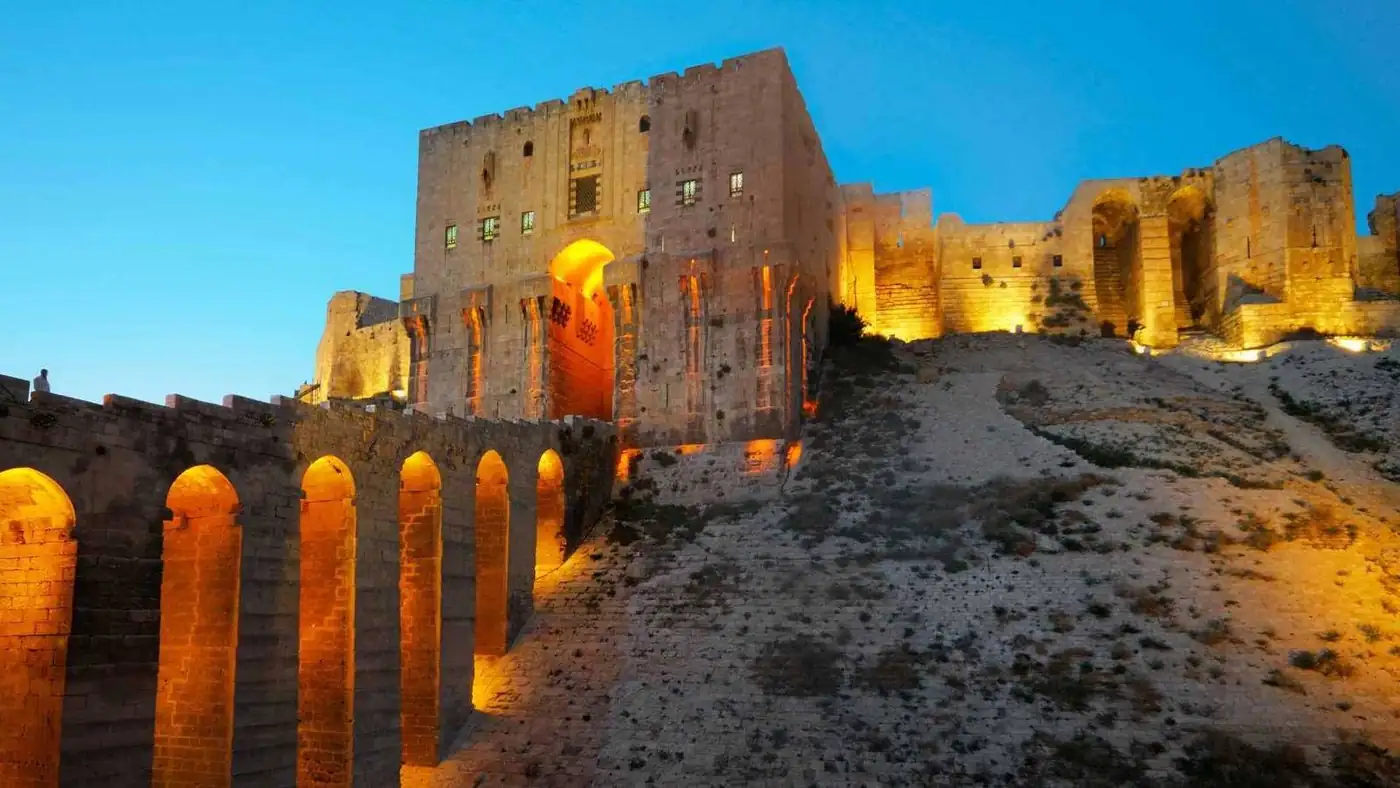
A 50-metre-high fortified tell crowned by Ayyubid walls (12th–13th c.) over Bronze Age temples of the storm god Hadad. The fortified bridge entrance is among the most photographed medieval gateways in the world.
Great Mosque of Aleppo
Founded in 715 CE by Caliph al-Walid I, famous for its free-standing Seljuk minaret (1090) — one of the most important pieces of medieval Islamic architecture.
Al-Madina Souq
12 km of vaulted stone passages that formed the largest covered market in the world, organised by trade: cotton, silk, soap, rope, copper, and spices.
Khan al-Wazir
A grand 17th-century Ottoman caravanserai with a sculpted gateway, traditionally where European consuls and traders lodged.
Al-Jdayde Quarter
The historic Christian neighbourhood of stone mansions, churches, and the laneways behind the now-restored Beit Wakil and Beit Sissi.
Aleppo Soap Workshops
Family workshops that have produced laurel-and-olive-oil ghar soap for over a thousand years — the ancestor of all hard soap.
National Museum of Aleppo
Holdings span Mari, Ebla, Ugarit, and Tell Halaf; the entrance is flanked by reconstructed basalt figures from the Aramean temple of Tell Halaf.
Traveller Tips
- Combine the citadel and the Great Mosque on the same morning — both are within the UNESCO core a short walk apart.
- Active restoration work is ongoing across the Old City; some lanes may be fenced off.
- Aleppo pepper is a perfect lightweight souvenir; buy it whole-flake from a souq spice merchant.
- Winters are genuinely cold — pack layers for November–February.
What to Eat
Kebab Halabi
Minced lamb kebab grilled over charcoal and served on flatbread with tomato, parsley, and Aleppo pepper.
Kebab Karaz
Aleppo's signature dish: lamb meatballs in a tart sour-cherry sauce, served on toasted bread.
Muhammara
The original Aleppine version — coarsely ground walnut, red pepper, breadcrumbs, and pomegranate molasses.
Sujuk
Spiced dried beef sausage seasoned with garlic, cumin, and red pepper.
Mabrumeh
Spiralled pistachio pastry drenched in rosewater syrup — the Aleppine answer to baklava.
Other local flavours: Kebab Halabi · Cherry kebab · Muhammara · Sujuk · Aleppo pepper
Where to Stay
Beit Wakil
Boutique heritage hotelRestored Jdayde mansion with an Andalusian-style courtyard, traditional iwan, and acclaimed restaurant.
Mansouriya Palace
Boutique heritage hotelAleppine mansion in the Christian quarter combining Ottoman painted ceilings with modern comfort.
Sheraton Aleppo
International businessLarge international-standard hotel near the new city centre with conference facilities.
Dar Zamaria
GuesthouseFamily-run guesthouse in a converted heritage house near Bab al-Hadid.