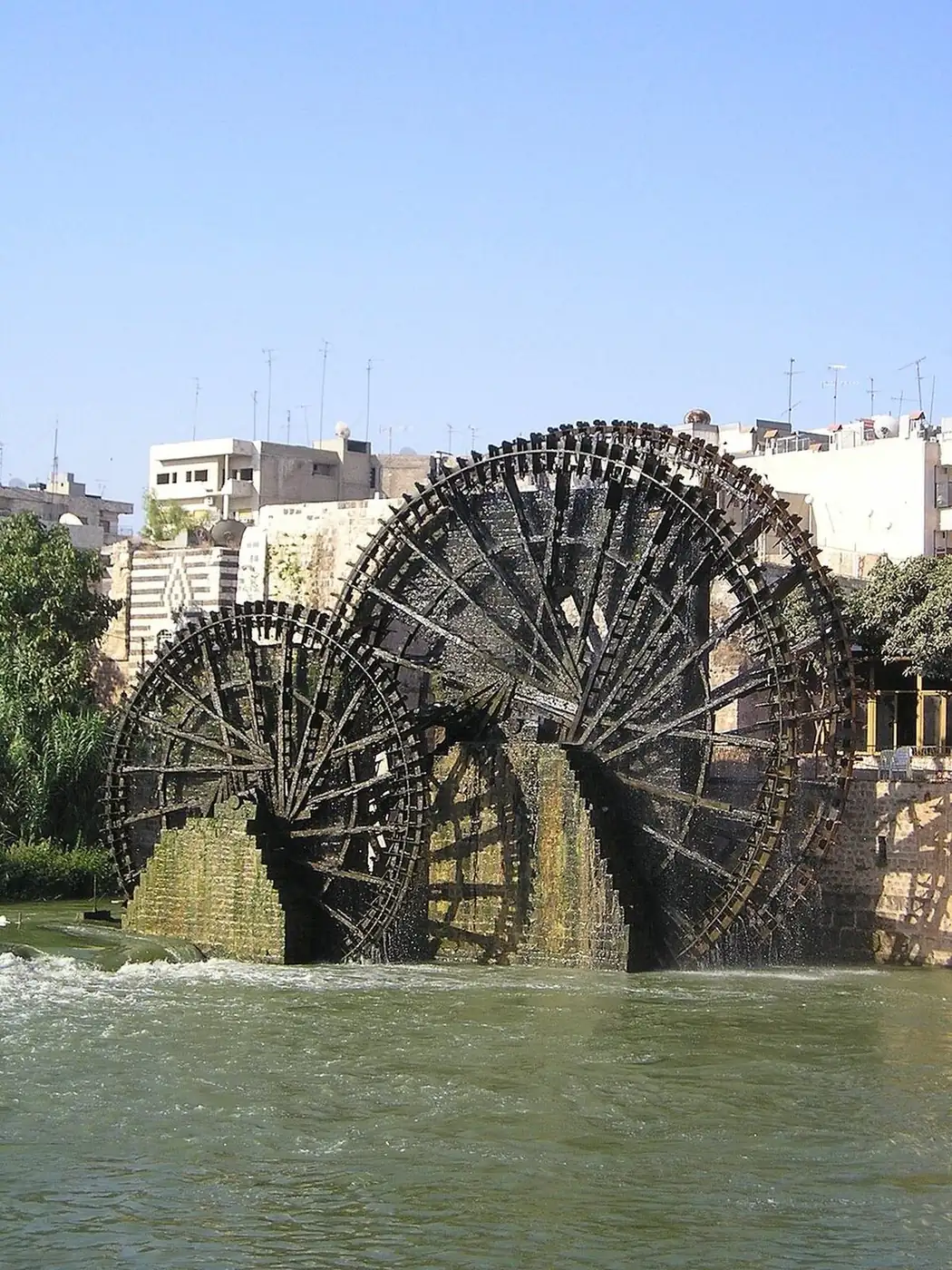
“City of the wooden norias on the Orontes.”
- Province
- Hama Governorate
- Population
- ~900,000
- Climate
- Mediterranean, slightly cooler than Homs.
- Best Time
- April–June, when the Orontes runs high and the norias sing.
Today's weather — Hama
Overview
History
Highlights
- Historic Norias of Hama
- Al-Nuri Mosque
- Azm Palace of Hama
- Ottoman-era riverfront districts
- Apamea ruins (1h north)
Major Attractions
Al-Mohammediyeh Noria
The largest of Hama's 17 surviving wooden water wheels, 21 m across, built in 1361 to feed the Great Mosque's aqueduct. Its low groan is the city's signature soundtrack.
An-Nuri Mosque
Built in 1163 by Nur ad-Din Zengi, with a distinctive carved wooden minbar and a riverside façade reflecting in the Orontes.
Azm Palace of Hama
An 18th-century governor's residence by the same family that built the Damascus palace — now a museum of Hama folk life with painted ceilings and a delicate courtyard.
Citadel Mound
A flat-topped hill in the city centre, the original Bronze Age and Iron Age settlement, now a landscaped park with views over the Orontes.
Apamea (Afamia)
An hour north — Hellenistic-Roman city with a 1.85 km colonnaded cardo, one of the longest in the Roman world.
Masyaf Castle
A dramatic 12th-century Assassin fortress an hour west in the foothills of the coastal mountains.
Traveller Tips
- Stay near the river to hear the norias at night — their wooden bearings creak as they turn.
- Visit norias in spring (April–June) when river levels are high enough to keep them spinning.
- Hama is conservative — dress modestly, especially near religious sites and on the corniche in the evening.
- Combine Hama with Apamea, the Dead Cities, and Krak des Chevaliers for a 2–3 day loop.
What to Eat
Halawet el-Jibn
Hama's iconic dessert — a soft, stretchy sweet-cheese dough wrapped around ashta cream, drizzled with rose syrup and pistachios.
Shish Barak
Lamb dumplings in warm yogurt with crushed garlic — a homestyle classic.
Kibbeh Hamawiyeh
Hama's pumpkin-and-bulgur kibbeh, lighter and tangier than the meat version.
Ka'ak
Sesame-seeded ring breads sold from carts along the river corniche.
Other local flavours: Halawet el-jibn (Hama's signature) · Shish barak · Maamoul
Where to Stay
Apamee Cham Palace
Four-starComfortable government-chain hotel near the city centre with pool and restaurant.
Noria Hotel
Mid-rangeSimple central hotel walking distance from the Al-Bisheriyat noria group.
Riverside Cafés (day)
Day stopWhile Hama has limited boutique stays, the riverfront cafés near the norias are a relaxing daytime base.
Dalil Crafts