Volume VI · 21 chapters
Idlib
A complete 21-chapter reference volume on Idlib governorate: geography, climate and history, Idlib city, the Dead Cities, Jabal Zawiya, Maarrat al-Numan, Ariha, Jisr al-Shughur, Saraqib, Binnish and Taftanaz, Harem and Salqin, Darkush and the Orontes valley, Armanaz and the Rouj plain, springs and natural resources, intangible heritage, tourist routes, suggested itineraries, restaurants and markets, hotels and camping, festivals, and practical visitor information.
Chapter 01
Introduction to Idlib Governorate
Idlib Governorate is considered one of the most important governorates in the northwest of the Syrian Arab Republic, representing a geographical and historical region characterized by its natural and cultural diversity. It combines fertile agricultural plains, mountains, limestone plateaus, valleys, rivers, and forests. It also contains one of the richest areas in the Near East with archaeological sites that document the development of human civilizations from prehistoric times to the Islamic era. Its geographical location played a pivotal role throughout history, serving as a link between northern and central Syria, and between the Syrian coast and the interior. Its trade routes connected Antioch, Aleppo, Apamea, Hama, and Latakia, making it an area of continuous human settlement for thousands of years.
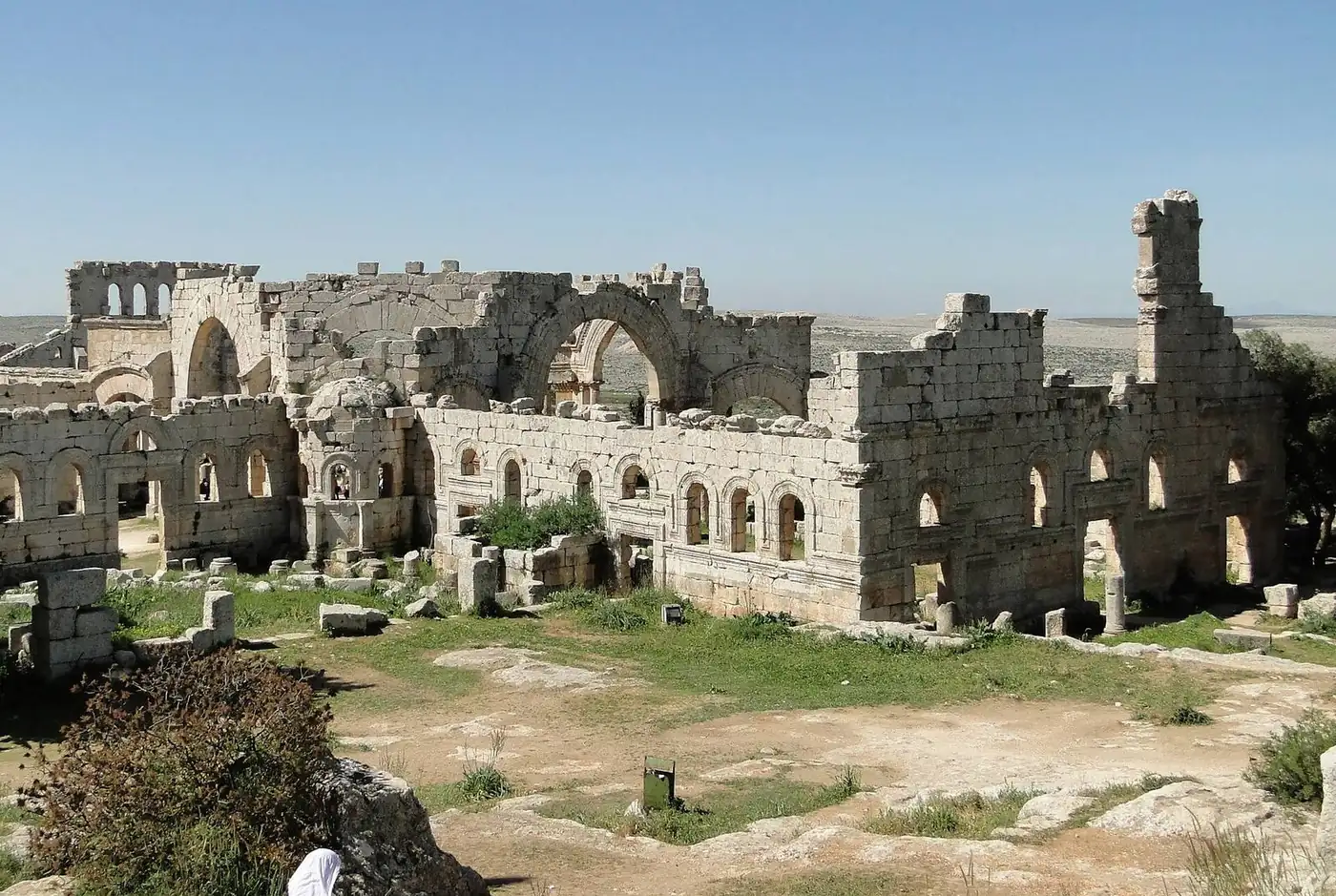
Idlib is known globally for hosting the greater part of the 'Dead Cities' (ancient villages and towns) listed on the UNESCO World Heritage list, which is a wide collection of Byzantine villages and towns that have exceptionally preserved their stone architecture. Today, they constitute one of the most important testimonies to rural life in the eastern Mediterranean during the early Christian centuries. The governorate also includes prominent historical cities such as Idlib, Maarat al-Numaan, Ariha, Jisr al-Shughur, Saraqib, Harem, Salqin, Kafr Takharim, Binnish, Armanaz, Darkush, and other cities and towns that played important political, economic, and cultural roles throughout various eras.
1.1Geographical Location
Idlib Governorate is located in the far northwest of Syria, extending between the inner plains and the western highlands, forming part of the natural region historically known as northern Bilad al-Sham (Greater Syria).
It is bordered by:
- ›Aleppo Governorate to the east and northeast
- ›Hama Governorate to the south
- ›Latakia Governorate to the southwest
- ›The Republic of Turkey to the north
- ›Aleppo Governorate and Latakia Governorate to the west across the highlands and border plains
This location has given it strategic importance since ancient times, as trade routes, armies, and caravans from Anatolia heading towards the Syrian interior and the Mediterranean coasts passed through it.
1.2Area
Idlib Governorate covers an area of approximately 6,100 square kilometers, making it a medium-sized governorate in Syria. However, it is characterized by a high concentration of archaeological sites and agricultural villages, and it boasts a clear diversity in natural environments, from fertile plains to mountains, forests, and valleys.
1.3Administrative Divisions
Administratively, the governorate is divided into a number of main regions that include many cities, towns, and villages. Idlib city is the administrative center of the governorate, while the cities of Maarat al-Numaan, Ariha, Jisr al-Shughur, Saraqib, Harem, Salqin, Kafr Takharim, Binnish, Armanaz, and Darkush constitute major urban centers serving their surrounding communities.
1.4Topography
Idlib is notably characterized by the diversity of its terrain, which can be divided into several main natural regions.
First: The Plains
These include:
- ›Ruj Plain
- ›Parts of Al-Ghab Plain
- ›The eastern plains surrounding Saraqib
- ›The agricultural plains extending around Ma'arat al-Nu'man
- ›Northern Plains
These areas are considered among the most fertile agricultural lands in Syria.
Second: The Mountains
The most important of these are:
- ›Jabal Zawiya
- ›Jabal al-Arbaeen
- ›Western Highlands
- ›The limestone hills scattered throughout the governorate
These mountains played an important defensive and natural role throughout history.
Third: The Valleys
A group of valleys is spread throughout the governorate, descending towards the Orontes River or the inner plains, contributing to the emergence of human settlements and agriculture.
Fourth: The Forests
Forests are primarily concentrated in the western and northwestern regions, especially around Jisr al-Shughur, Darkush, and the highlands near the Syrian-Turkish border.
1.5Climate
Idlib Governorate has a Mediterranean climate, with clear variations depending on altitude.
It is distinguished by:
- ›Warm to hot and dry summers
- ›Cold and rainy winters
- ›Relatively heavy rainfall in the western highlands
- ›Moderate temperatures in mountainous areas
- ›A warmer climate in the eastern plains
This climatic diversity has contributed to the variety of plant cover and agricultural crops.
1.6Water Resources
The governorate contains multiple water resources, including:
- ›Orontes River
- ›Natural Springs
- ›Seasonal wadis (valleys)
- ›Groundwater
- ›Ponds and reservoirs
The inhabitants of the governorate have relied on these resources for agriculture and settlement since ancient times.
1.7Vegetation Cover
The vegetation in the governorate varies according to the nature of the terrain.
Among the most prominent are:
- ›Olive trees
- ›Fig trees
- ›Grapevines
- ›Almonds
- ›Pistachios
- ›Valonia oak
- ›Oak
- ›Pine in some areas
- ›Medicinal and aromatic plants
Olives are the most prominent and widespread agricultural crop in Idlib.
1.8Agricultural Wealth
Agriculture is the most important traditional economic activity in the governorate.
Among the most prominent crops are:
- ›Olives
- ›Wheat
- ›Barley
- ›Pistachios
- ›Grapes
- ›Figs
- ›Cherries
- ›Pomegranates
- ›Almonds
- ›Cumin
- ›Nigella sativa (black seed)
- ›Seasonal vegetables
The fertility of the soil and the availability of water have made Idlib one of the most important agricultural governorates in Syria.
1.9Livestock Wealth
Livestock farming is prevalent in the governorate:
- ›Sheep
- ›Cattle
- ›Goats
- ›Poultry
- ›Beehives
It is also famous for producing:
- ›Milk
- ›Cheeses
- ›Local ghee
- ›Natural honey
1.10Population
The governorate has been known since ancient times for its dense settlement, due to the fertility of its lands, abundant water, and its commercial location.
The population is distributed between:
- ›Cities
- ›Towns
- ›Agricultural villages
- ›Mountain communities
This widespread distribution contributed to the emergence of a vast network of historical villages, which are considered among the largest rural communities in Syria.
1.11Architecture
Idlib is characterized by two main architectural styles.
The first is represented by the ancient limestone architecture for which the Dead Cities were famous, where white limestone was used in building houses, churches, olive presses, and towers.
The second is represented by the traditional architecture of modern cities and villages that have evolved over time while preserving many local elements.
1.12Historical Importance
Idlib Governorate is considered one of the richest regions in Syria in terms of antiquities.
Numerous civilizations have succeeded one another there, including:
- ›Prehistoric civilizations
- ›Aramaean civilization
- ›Hittite civilization
- ›Assyrian civilization
- ›Persian civilization
- ›Hellenistic civilization
- ›Roman civilization
- ›Byzantine civilization
- ›Islamic civilization
And each stage has left traces that are still standing today.
1.13Forgotten Cities
The Forgotten Cities are among the most prominent civilizational characteristics of the governorate. These are population centers that flourished between the first and seventh centuries AD, then were gradually abandoned, with their stone buildings exceptionally preserved. They include hundreds of archaeological sites that represent a unique model of Byzantine rural life.
1.14The Governorate's Place in Syrian Tourism
Idlib represents one of the richest Syrian governorates in terms of tourist attractions, combining:
- ›Antiquities
- ›Historical cities
- ›Castles
- ›Valleys
- ›Forests
- ›Springs
- ›Mountains
- ›Heritage villages
- ›Religious sites
- ›Agricultural environments
This makes it one of the most diverse governorates from a tourism and cultural perspective.
1.15Civilizational Identity
Idlib Governorate embodies a unique model of interaction between man and nature over thousands of years, where its identity was formed by the convergence of agriculture, trade, civilization, and urban development. It has become home to hundreds of historical villages and archaeological cities that still tell the story of the evolution of societies in northern Bilad al-Sham from ancient times to the modern era.
Idlib Governorate represents one of the most important historical and natural regions in the Syrian Arab Republic, combining a strategic geographical location, environmental diversity, agricultural wealth, and a civilizational heritage spanning thousands of years. This diversity has contributed to the emergence of a wide network of cities, towns, and villages that played prominent roles in the history of northern Bilad al-Sham. The governorate also hosted the largest concentration of Byzantine archaeological cities in the world, alongside fertile plains, mountains, forests, and rivers, thus making it one of the richest Syrian governorates in historical, cultural, and natural terms.
Cities in this governorate