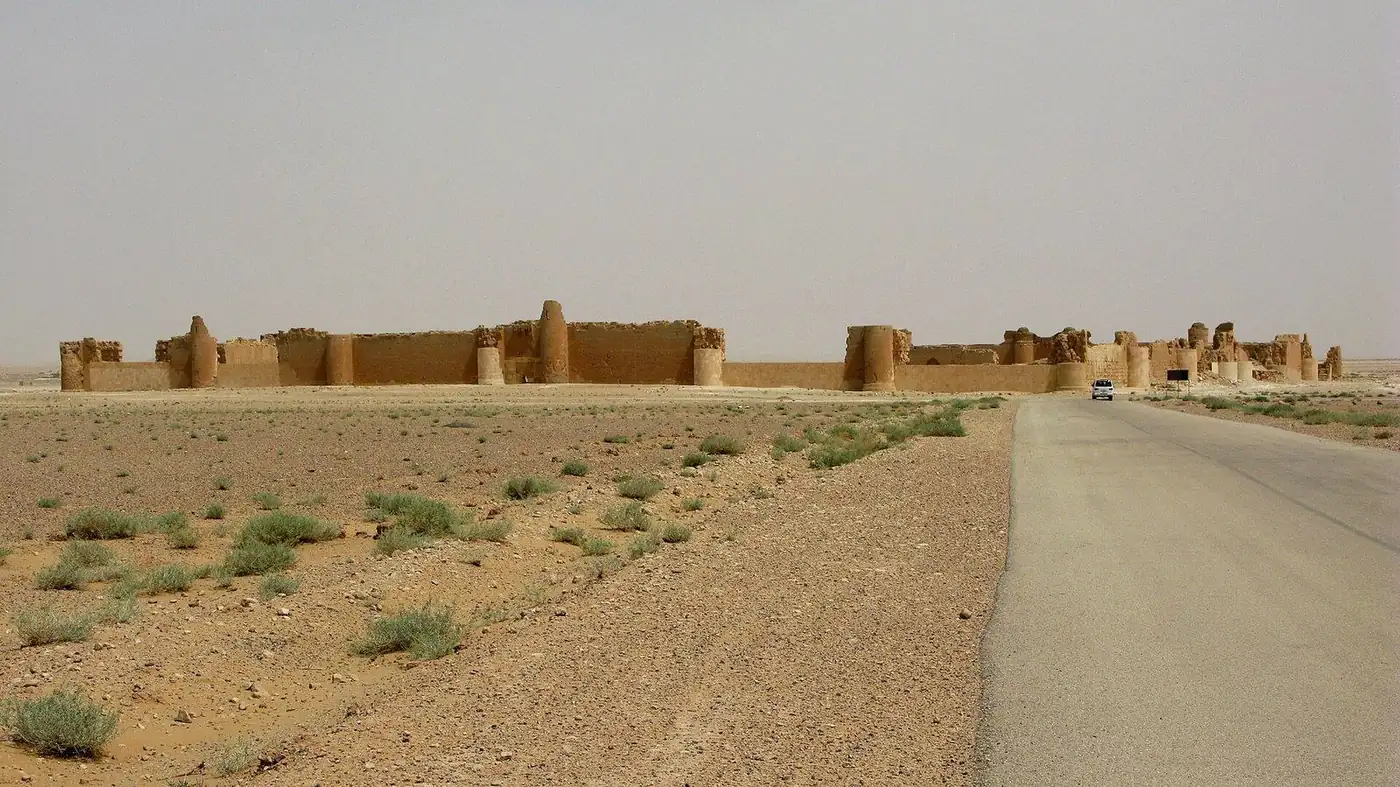
Archaeological · Badia steppe, north-east of Palmyra
Qasr al-Hayr al-Sharqi
قصر الحير الشرقي
35.0733° N · 39.0736° E“An Umayyad desert city built in a single reign.”
- Category
- Archaeological
- Era
- 728–729 CE
- Location
- Badia steppe, north-east of Palmyra
- UNESCO
- Not inscribed
Overview
Significance
Notable Features
- Large enclosure (167 m square) with decorated gate
- Small enclosure with residential apartments
- Congregational mosque
- Umayyad minaret
- Bath complex and olive press
- Canal, dam and field system in the steppe
Major Attractions
The Great Gate
Flanked by half-round towers with stucco and brick ornament — the showpiece façade of the large enclosure.
The Minaret
One of the earliest surviving minarets in the Islamic world, standing alone above the ruins.
The Small Enclosure
A palatial block of courtyard apartments where the caliphal household stayed.
The Mosque
A hypostyle prayer hall inside the walls, one of the first purpose-built congregational mosques of the steppe.
The Water System
Traces of the canal and dam that irrigated gardens and olive groves — the reason the site existed at all.
Visitor Tips
- This is deep steppe: travel with a driver who knows the tracks, and never alone.
- Check regional access conditions before planning; the route runs off the Palmyra–Deir ez-Zor axis.
- Carry fuel, water and shade — there is no settlement nearby.
- Late afternoon light picks out the brick patterning on the gate towers.
What to Eat Nearby
Self-catered desert meal
Nothing is available on site; bring everything from Palmyra or Deir ez-Zor.
Palmyra restaurants
The oasis town is the nearest place for a proper meal after the drive.
Steppe dates and coffee
Bedouin hospitality along the route often means dates and cardamom coffee.
Where to Stay
Palmyra guesthouses
Oasis baseThe usual base for the eastern steppe, about 100 km south-west.
Deir ez-Zor hotels
City baseAn alternative base when approaching from the Euphrates.