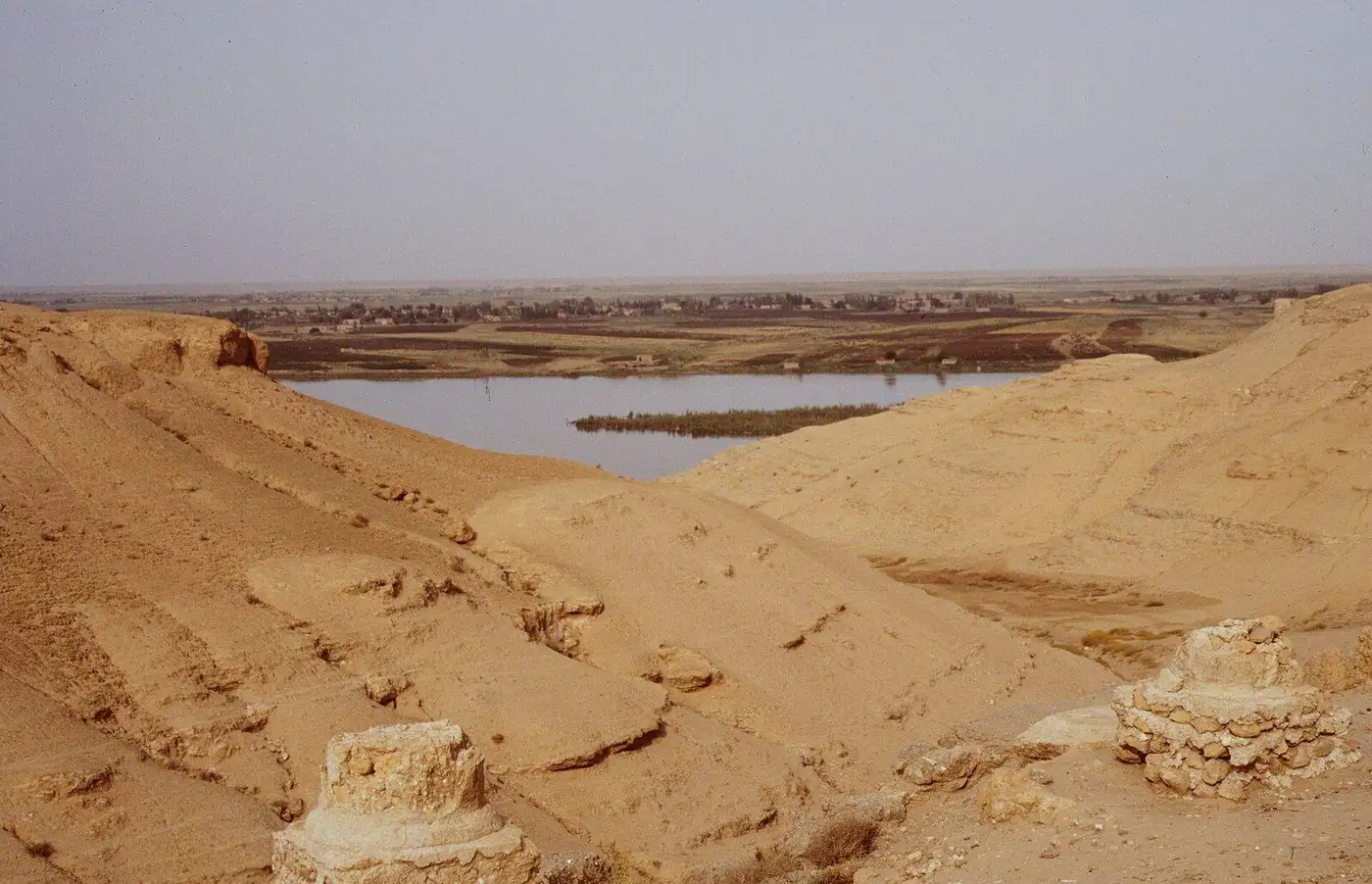
Archaeological · Deir ez-Zor Governorate
Dura-Europos
دورا أوروبوس
34.7472° N · 40.7297° E“The Pompeii of the Syrian desert.”
- Category
- Archaeological
- Era
- 3rd century BCE – 3rd century CE
- Location
- Deir ez-Zor Governorate
- UNESCO
- Not inscribed
Overview
Significance
Notable Features
- Roman military structures
- Dura synagogue frescoes
- Earliest Christian house church
- Temples of Bel and the Palmyrene gods
- City walls and gates
Major Attractions
Synagogue
A 3rd-century CE synagogue with figural wall frescoes — the most complete cycle of ancient Jewish narrative art known (originals now in Damascus).
Christian House Church
The earliest identified Christian church (c. 232 CE), a converted private house with surviving baptistery paintings.
Temple of Bel & Palmyrene Gods
Painted temple where Roman and Palmyrene auxiliaries worshipped together.
Roman Military Quarter
Barracks, baths, and the so-called House of the Scribes built when Dura became a Roman frontier garrison.
City Walls & Siege Mine
The west wall preserves the Sasanian siege mine of 256 CE — the world's earliest archaeologically documented use of chemical warfare (sulphur smoke).
Visitor Tips
- Remote and currently difficult to visit — confirm security and access in advance.
- Most surviving art is in the Damascus National Museum and Yale University — see them too for the full story.
- Bring all water and supplies; the site has no services.
What to Eat Nearby
Masgouf (river fish)
Slow-grilled Euphrates fish on coals — the eastern signature.
Bedouin coffee & dates
Cardamom-spiced coffee and fresh dates — the desert hospitality ritual.
Where to Stay
Deir ez-Zor base
LimitedVisit on a day trip from Deir ez-Zor (90 km); city accommodation is basic and limited since 2011.