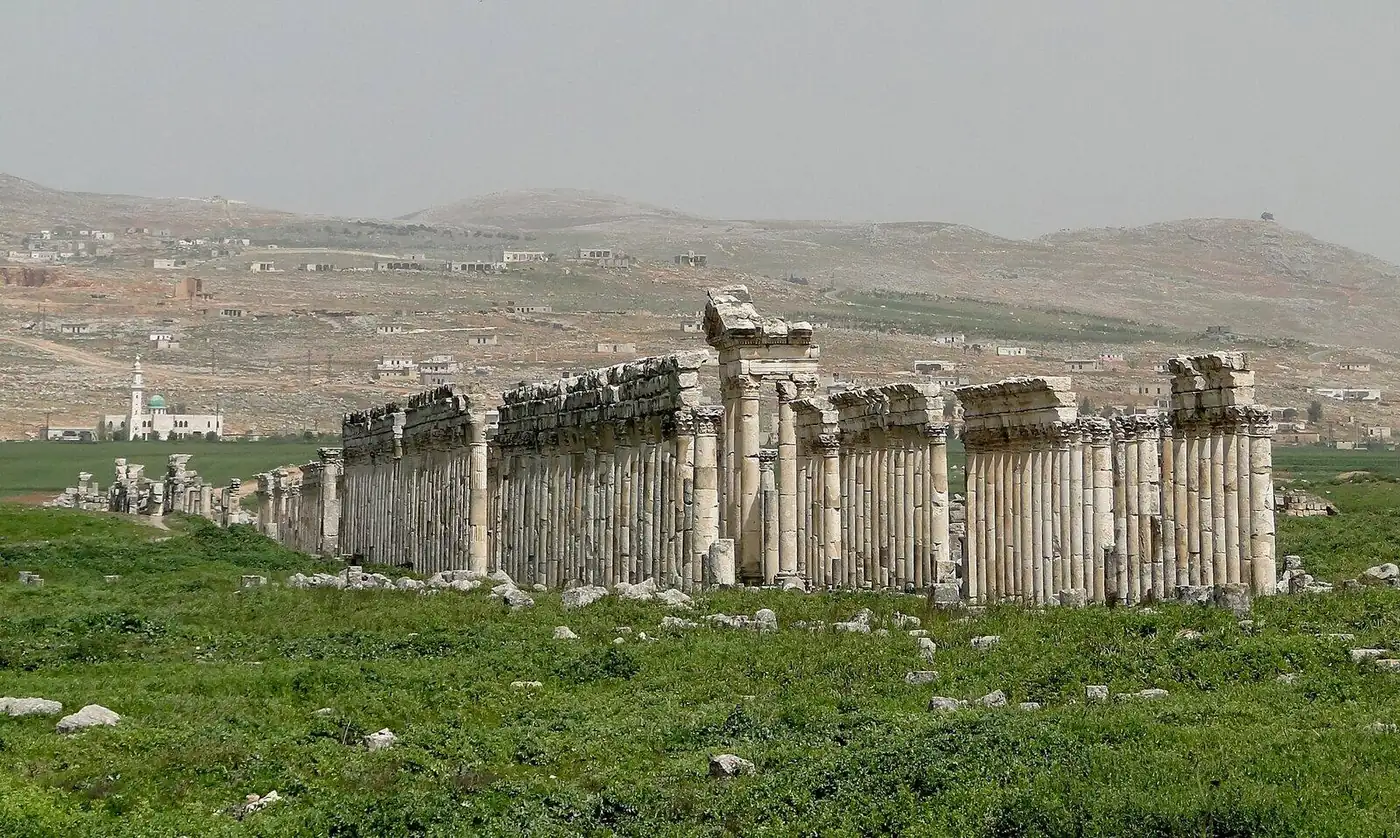
Ancient City · Hama Governorate
Apamea (Afamia)
أفاميا
35.4178° N · 36.3961° E“A two-kilometre Roman colonnade.”
- Category
- Ancient City
- Era
- Hellenistic–Roman
- Location
- Hama Governorate
- UNESCO
- Not inscribed
Overview
Founded by Seleucus I around 300 BCE, Apamea housed a Roman population of half a million and is dominated by its 1.85-kilometre colonnaded Cardo, the longest in the ancient world.
Significance
One of the most ambitious surviving Roman urban plans.
Notable Features
- Great Colonnaded Avenue
- Roman theatre (one of the largest in the empire)
- Mosaic discoveries (now in Apamea Museum)
- Roman & Byzantine architecture
- Apamea citadel and Ottoman caravanserai
Major Attractions
Great Colonnaded Cardo
The 1.85 km columned avenue with spirally fluted shafts unique to Apamea — among the most extensive Roman streetscapes anywhere.
Roman Theatre
One of the largest theatres in the Roman empire (around 20,000 seats) — partially excavated.
Apamea Museum
Housed in an Ottoman caravanserai at the foot of the citadel, holding the celebrated mosaics rescued from the residential quarters.
Citadel of Qal'at al-Madiq
Mamluk and Ayyubid fortress on the acropolis tell, looking down over the colonnade.
Visitor Tips
- Walk the full length of the cardo at sunrise or sunset — the spirally fluted columns glow.
- Apamea has suffered substantial looting since 2011 — keep to the main paths and report anything suspicious to the site guard.
- Combine with Hama and the Dead Cities for a 2-day northern itinerary.
What to Eat Nearby
Hama specialities
Halawet el-jibn and shish barak in Hama, an hour south.
Olive picnic
Buy bread, olives, and labneh in Hama and picnic among the columns.
Where to Stay
Hama base
RecommendedHama (1 hr) is the practical base — the Apamee Cham Palace and central mid-range hotels are the main options.