Volume V · 15 chapters
As-Suwayda
A complete 15-chapter reference volume on As-Suwayda: geography, basalt landscapes and climate of Jabal al-Arab; history through the ages; the cities of Suwayda, Shahba, Qanawat and Salkhad; reserves, forests and springs; volcanoes and caves; tourist routes and suggested itineraries; restaurants, cafés and popular markets; hotels, guesthouses and camping; festivals and cultural seasons; intangible heritage; and practical visitor information.
Chapter 01
Introduction to Sweida Governorate
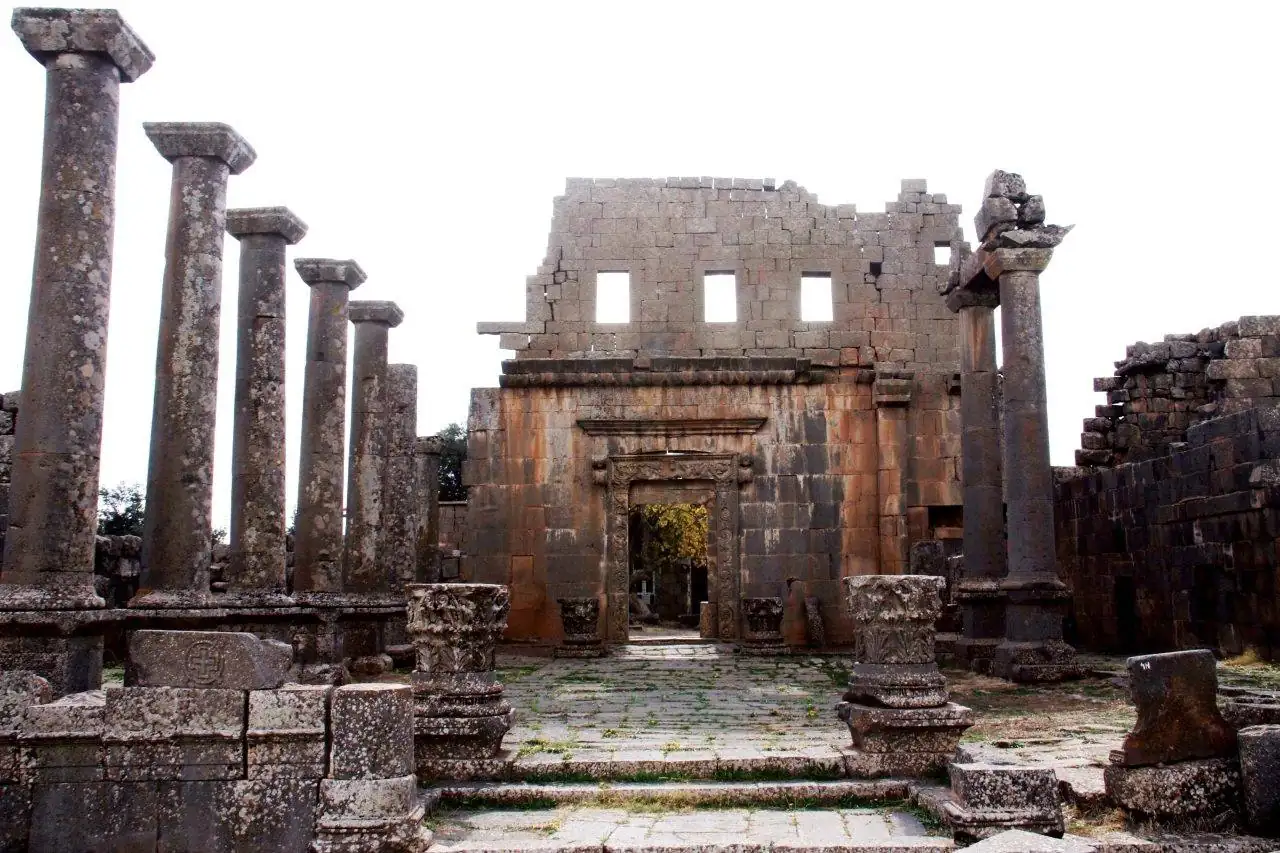
As-Suwayda Governorate is one of the southern governorates in the Syrian Arab Republic, occupying the largest part of the Jabal al-Arab region, historically known as Jabal al-Druze, which is one of the most prominent mountainous regions in the Levant. The governorate represents a unique model that combines volcanic landscapes, mountainous highlands, and fertile agricultural plains. It also possesses a rich heritage spanning thousands of years, during which Nabataean, Roman, Byzantine, and Islamic civilizations left behind ruins that stand to this day.
As-Suwayda is distinguished by its geographical character, which differs from most Syrian governorates. Black basalt rocks are the dominant feature of its topography and traditional architecture, while villages and towns are scattered across volcanic plateaus, surrounded by fields, orchards, vineyards, apple, almond, and olive groves, which has given the governorate a distinctive urban and agricultural identity within Syria.
1.1Geographical location
Al-Suwayda Governorate is located in the southern part of Syria, representing the natural extension of Jabal al-Arab, and is bordered by:
- ›Rif Dimashq Governorate from the north.
- ›Daraa Governorate from the west.
- ›The Syrian Desert from the east.
- ›The Syrian-Jordanian Border from the South.
This location grants the governorate geographical importance, as it lies at the crossroads of historical routes that connected Damascus to southern Bilad al-Sham and the Arabian Peninsula, serving throughout the ages as a station for trade caravans and human movement.
1.2Area
Sweida Governorate covers an area of approximately 5,550 square kilometers, making it a medium-sized governorate in Syria. Its terrain varies, encompassing volcanic highlands, plateaus, agricultural plains, valleys, and rugged basaltic areas.
The volcanic mass of Jabal Al-Arab is the most influential geographical element in the formation of the governorate, with volcanic rocks covering vast areas of it.
1.3Administrative Divisions
The governorate encompasses the city of As-Suwayda as its administrative center, in addition to a number of cities, towns, and villages scattered throughout Jabal al-Arab.
Among the most prominent cities are:
- ›Suweida
- ›Shahba.
- ›Canals/Aqueducts.
- ›Salkhad.
These cities are surrounded by dozens of villages scattered across volcanic plateaus and agricultural plains, together forming an interconnected urban network.
1.4Population
Most of the governorate's population is concentrated in cities and villages located on volcanic slopes and plateaus, where fertile soil and water availability have allowed for the establishment of stable human settlements since ancient times.
The local community is characterized by strong social ties and primarily relies on agriculture, trade, and services, alongside high levels of education compared to several other rural areas in Syria.
1.5Jabal al-Arab
Jabal al-Arab forms the geographical heart of Sweida Governorate and is considered the largest volcanic mountain in the Levant. It resulted from volcanic activity that continued through successive geological periods, leaving thousands of square kilometers of black basaltic rocks.
The mountain extends from the north to the south of the governorate, encompassing high peaks, vast plateaus, valleys, caves, and volcanic formations that are considered among Syria's most prominent natural phenomena.
1.6The climate
As-Suwayda Governorate has a mountainous Mediterranean climate, influenced by the region's elevation above sea level.
It is characterized by:
- ›Relatively mild summer.
- ›Cold winter with snow falling on the highlands.
- ›A long spring rich in wild plants
- ›A mild autumn suitable for agricultural activities.
This climate contributed to the diversity of agricultural production and the widespread presence of fruit trees across most of the governorate.
1.7Topography
The governorate's terrain varies significantly, and includes:
- ›Volcanic Mountains
- ›Basaltic hills / Basaltic plateaus
- ›Agricultural Plains
- ›Valleys
- ›Volcanic Cones
- ›Rocky fields.
- ›Natural depressions
This geographical diversity gives the governorate a unique visual character that distinguishes it from other Syrian governorates.
1.8Soil
The volcanic soil is one of the most important assets of Sweida Governorate, characterized by its fertility and moisture retention, making it suitable for cultivating fruit trees and grains.
Basaltic soil covers most agricultural lands, while alluvial soils appear in some plains and valleys.
1.9Water resources
Despite the province's volcanic nature, Sweida boasts several water resources that its inhabitants have relied upon since ancient times.
Including:
- ›Natural springs.
- ›Wells.
- ›Ancient pools.
- ›Rock cisterns.
- ›Modern Dams
These resources contributed to the stability of the population and the flourishing of agricultural activity throughout various eras.
1.10Vegetation
Many types of wild plants and trees are found in the governorate, most notably:
- ›Oak trees.
- ›Oak Trees
- ›Terebinth trees.
- ›Hawthorn
- ›Wild almonds.
- ›Thyme
- ›Sage (herb)
- ›Wormwood.
- ›Lavender.
- ›Medicinal and aromatic plants
Orchards of also spread throughout the area.
- ›Apples
- ›Grapes
- ›Olives
- ›Cherries.
- ›Figs
- ›Pomegranates
1.11Wildlife.
The governorate boasts a diverse wildlife, and among the animals associated with its environment are:
- ›Red Fox
- ›Jackal.
- ›Wild rabbit.
- ›Striped hyena.
- ›Hedgehog.
- ›Land Tortoises
- ›Lizards
The region also forms a habitat and a migratory corridor for a number of resident and migratory birds.
1.12Economy
The governorate's economy is primarily based on:
- ›Agriculture
- ›Livestock farming.
- ›Fruit production.
- ›Grape cultivation.
- ›Olive oil.
- ›Food industries.
- ›Commerce.
- ›Services.
Grape and apple cultivation are among the most important agricultural activities for which the governorate is renowned.
1.13Architecture
Sweida is characterized by architecture that relies almost entirely on black basalt stone.
Among its most prominent characteristics are:
- ›Thick Stone Walls
- ›Basalt arches
- ›Stone roofs.
- ›Carved doors.
- ›Small windows
- ›Inner courtyards
This architecture is still present in historic towns and villages, forming one of the most prominent elements of Jabal al-Arab's architectural identity.
1.14Historical Importance/Significance
As-Suwayda Governorate has witnessed the succession of multiple civilizations, including:
- ›Ancient Local Civilizations.
- ›Nabataean Civilization.
- ›Roman Civilization.
- ›Byzantine Civilization.
- ›Islamic Civilization.
These civilizations left behind a vast network of cities, temples, churches, roads, castles, and public facilities, making the governorate one of the richest in Syria in terms of archaeological sites.
1.15Cultural identity
As-Suwayda represents a significant center of cultural heritage in southern Syria, having preserved many social customs, folk arts, and oral traditions, in addition to local cuisine, traditional architecture, and handicrafts that reflect the character and history of Jabal al-Arab.
As-Suwayda Governorate is one of the most distinct Syrian governorates geographically and culturally, combining volcanic mountains, agricultural landscapes, historic cities, and a rich cultural heritage. Its location and natural environment have contributed to the rise of successive civilizations that left prominent traces still bearing witness to the region's history, while its inhabitants have preserved many elements of local identity, making the governorate today one of the most important historical and cultural regions in Syria.
Volume Five
Sweida Governorate
Cities in this governorate