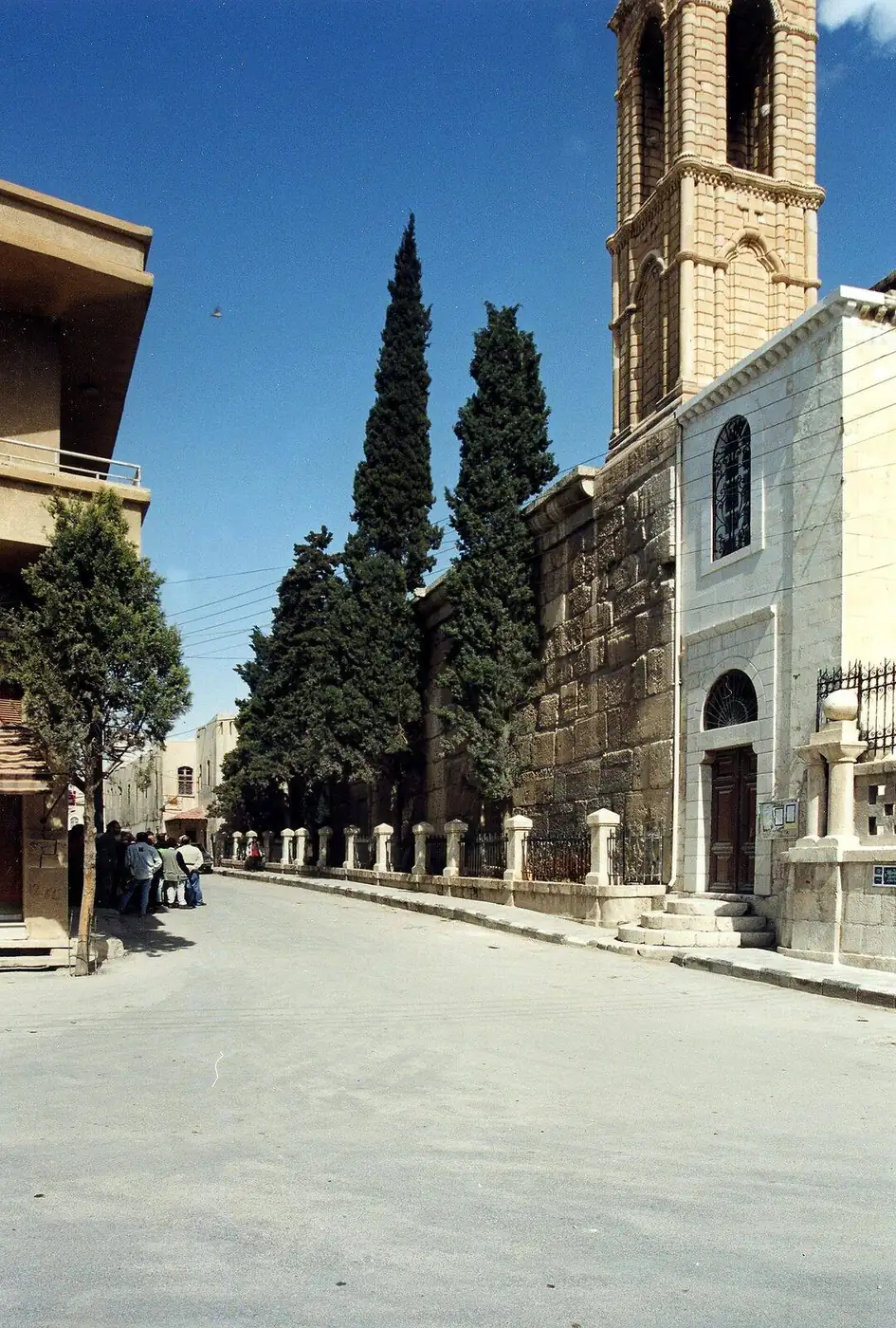
Religious · Rif Dimashq
Yabrud
يبرود
33.9697° N · 36.6586° E“One of the oldest continuously inhabited settlements on Earth.”
- Category
- Religious
- Era
- Paleolithic – present
- Location
- Rif Dimashq
- UNESCO
- Not inscribed
Overview
Yabrud's Iskafta and Ras al-Ain caves yielded the type-site sequence for the Yabrudian Middle Paleolithic culture, dating back more than 200,000 years.
Significance
Continuously inhabited since the Stone Age — a living link between prehistoric, Roman, and Christian Syria.
Notable Features
- Iskafta Cave (Paleolithic type-site)
- Cathedral of Saints Constantine & Helen (built on a Roman temple of Jupiter)
- Roman temple remains
- Ancient hillside town fabric
Major Attractions
Cathedral of Saints Constantine & Helen
A Christian cathedral built into a 2nd-century Roman temple of Jupiter — the columns of the temple cella still frame the church interior.
Iskafta Cave
The type-site of the Yabrudian Middle Paleolithic culture; a 1930s excavation defined a key stage in Levantine prehistory.
Old Town Lanes
Stepped lanes of stone houses climbing the hillside, with carved Roman fragments reused in walls and lintels.
Visitor Tips
- Yabrud is a short detour off the Damascus–Homs highway; combine with Maaloula and Saydnaya in one day.
- Ask at the cathedral for the key to the Roman temple chamber behind the altar.
- Best in spring when the surrounding hills are green and the cave terraces accessible.
What to Eat Nearby
Apricots
Yabrud is famous for its apricots — eaten fresh in season and dried for the rest of the year.
Village mezze
Small mountain restaurants serve mountain herbs, labneh, and grilled meats.
Where to Stay
Damascus base
RecommendedVisit as a half-day trip from Damascus (80 km north).