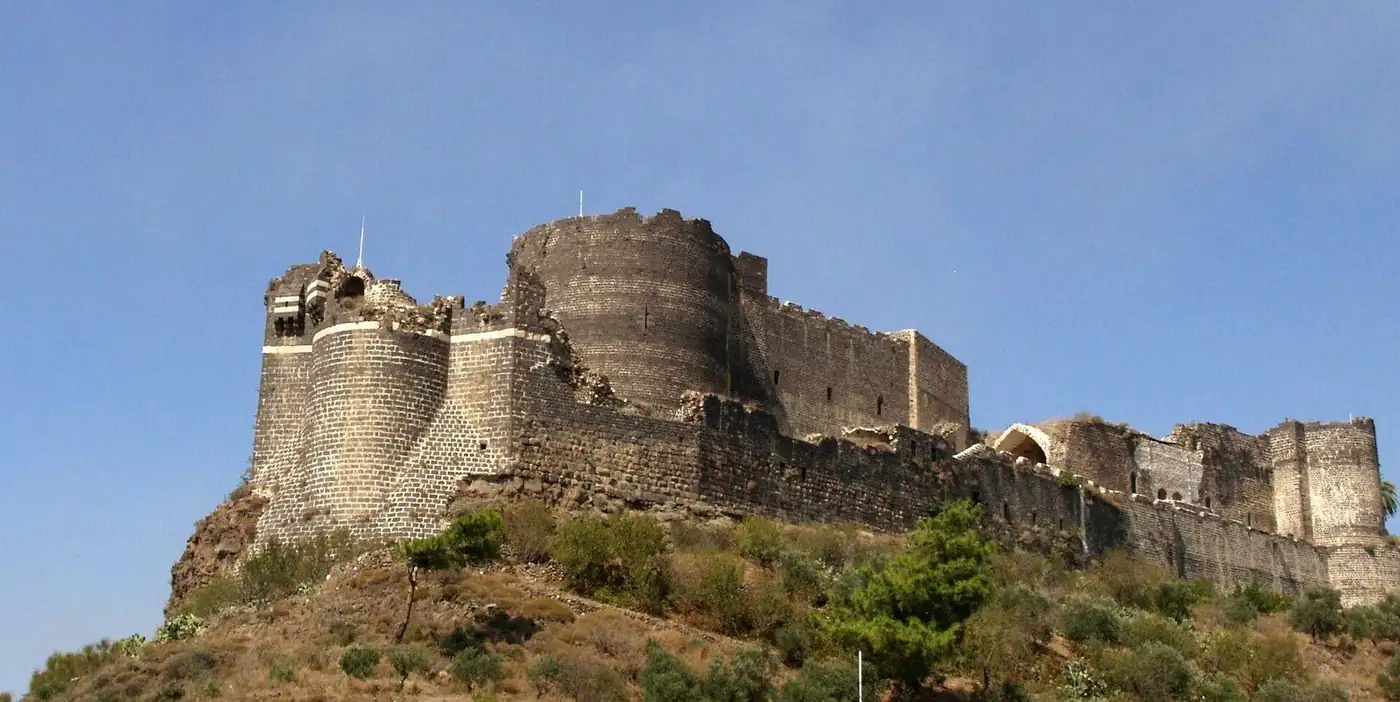
Castle · Baniyas, Tartus governorate
Marqab Citadel (Qalaat al-Marqab)
قلعة المرقب
35.1522° N · 35.9494° E“The black basalt watchtower of the Crusader coast.”
- Category
- Castle
- Era
- 1062–1285 CE
- Location
- Baniyas, Tartus governorate
- UNESCO
- Not inscribed
Overview
Significance
Notable Features
- Circular basalt donjon with 5 m thick walls
- Double curtain wall with 14 towers
- Vaulted Hospitaller chapel with fresco traces
- Great hall and knights' refectory
- Cisterns and windmill tower
- Views over the sea and the Jebel Ansariyah
Major Attractions
The Donjon
A colossal circular keep at the southern point of the triangle — the strongest single element of any Crusader castle on the coast.
The Chapel
A Romanesque Hospitaller chapel whose apse still carries fragments of 13th-century wall painting, including a Christ in Majesty.
The Great Hall
A vaulted double-aisled hall used for assemblies of the Order, remarkably intact under its basalt ribs.
Curtain Walls & Towers
A near-complete circuit you can walk, with arrow slits framing the Mediterranean on one side and the mountains on the other.
Underground Cisterns
Rock-cut reservoirs that allowed a garrison of a thousand to hold out for years.
Visitor Tips
- Allow two hours — the enclosure is huge and the walk from the gate to the donjon alone takes 15 minutes.
- Morning light is best for photographing the black basalt against the sea.
- Pair with Baniyas seafront for lunch and Tartus or Latakia for the night.
- There is little shade and a stiff sea wind; a light windbreaker helps even in summer.
What to Eat Nearby
Baniyas fish grills
Seafront restaurants below the castle serve sultan ibrahim (red mullet) and sayyadieh rice.
Coastal mezze
Muhammara, hummus, and pickled turnip served with mountain arak in the villages inland.
Citrus and loquat
The coastal plain around Baniyas is Syria's citrus belt — roadside stalls sell oranges, lemons and akkidinya in season.
Where to Stay
Tartus city hotels
City baseTartus, 40 km south, has the widest choice of seafront hotels and is the usual base for the coast.
Latakia resorts
Coastal resortLatakia's northern beach hotels are 60 km away and suit a longer coastal stay.
Baniyas guesthouses
SimpleA handful of small family-run hotels in Baniyas itself, best for early-morning castle visits.