Archaeological · Idlib Governorate
Ebla (Tell Mardikh)
إبلا
35.7972° N · 36.7972° E“A Bronze Age power rediscovered in 1964.”
- Category
- Archaeological
- Era
- 3rd millennium BCE
- Location
- Idlib Governorate
- UNESCO
- Not inscribed
Overview
Ebla was an early Bronze Age kingdom that controlled much of northern Syria around 2400 BCE. Excavation of the royal palace recovered more than 17,000 cuneiform tablets in the Eblaite language.
Significance
Rewrote the history of pre-Akkadian Syria, Amorite civilisation, and ancient Semitic languages.
Notable Features
- Royal Palace G
- Ebla cuneiform tablet archives
- Lower city ramparts
- Trade-network evidence with Egypt and Sumer
- Amorite-period temples
Major Attractions
Royal Palace G
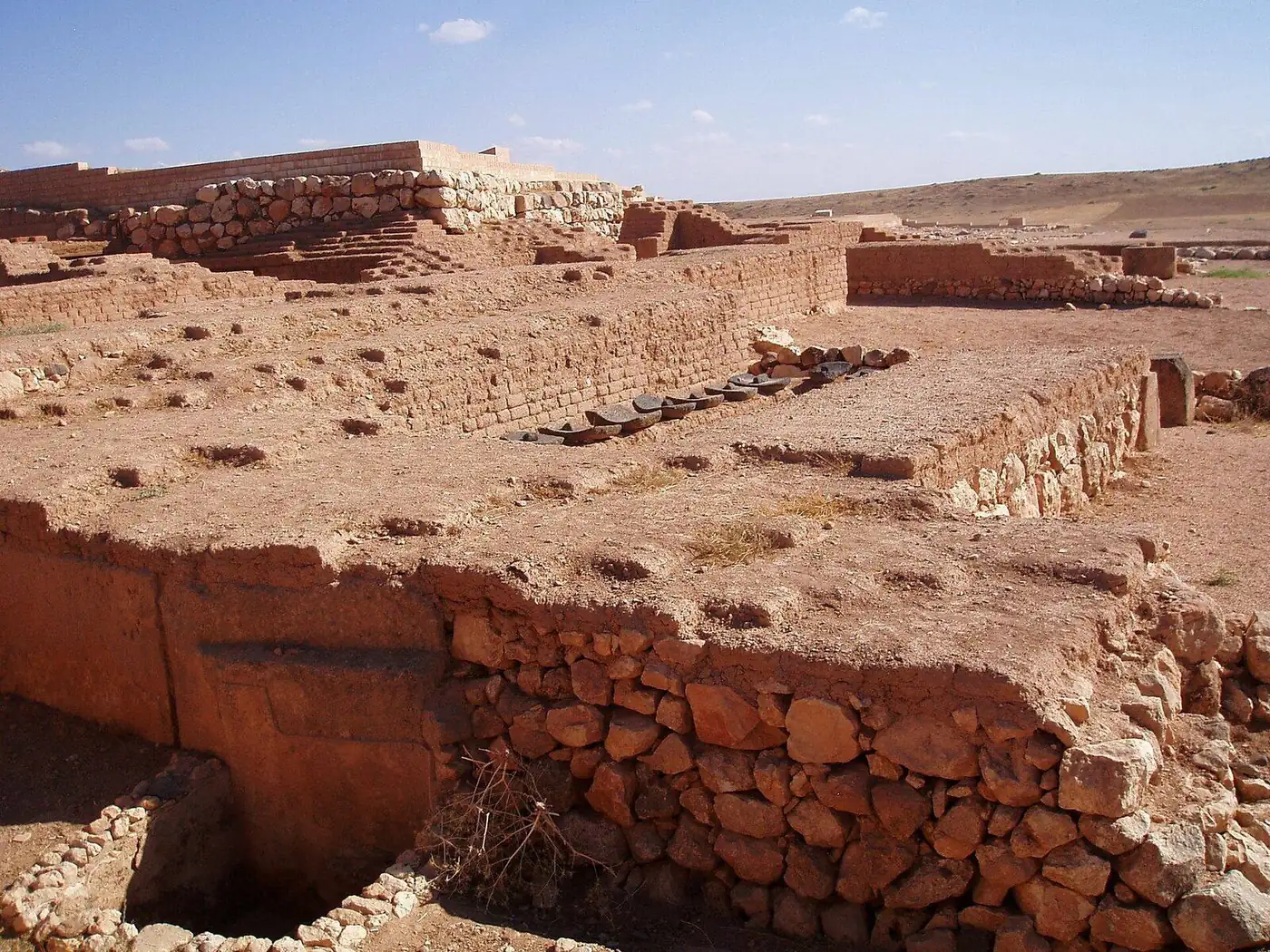
The 24th-century BCE palace whose burnt archive preserved the Ebla tablets — the floor plan is partially exposed.
Lower City Ramparts
Massive earthen ramparts enclosing the lower town, still legible as a ring around the central tell.
Temple of Ishtar
Middle Bronze Age temple on the acropolis, restored after excavation.
Idlib Museum
30 minutes away in Idlib — houses the Ebla tablets and royal statuary recovered from the site.
Visitor Tips
- Visit the Idlib Museum on the same trip — the tablets are the reason Ebla matters and they're not on site.
- Check current security in Idlib governorate before independent travel.
- Bring water and a hat — the tell is exposed.
What to Eat Nearby
Zaatar bi-Zeit
Idlib's celebrated olive oil with wild thyme — the regional breakfast.
Saj Bread
Paper-thin flatbread from the convex griddle.
Where to Stay
Aleppo base
RecommendedMost travellers base in Aleppo and combine Ebla with Saint Simeon and the Dead Cities.