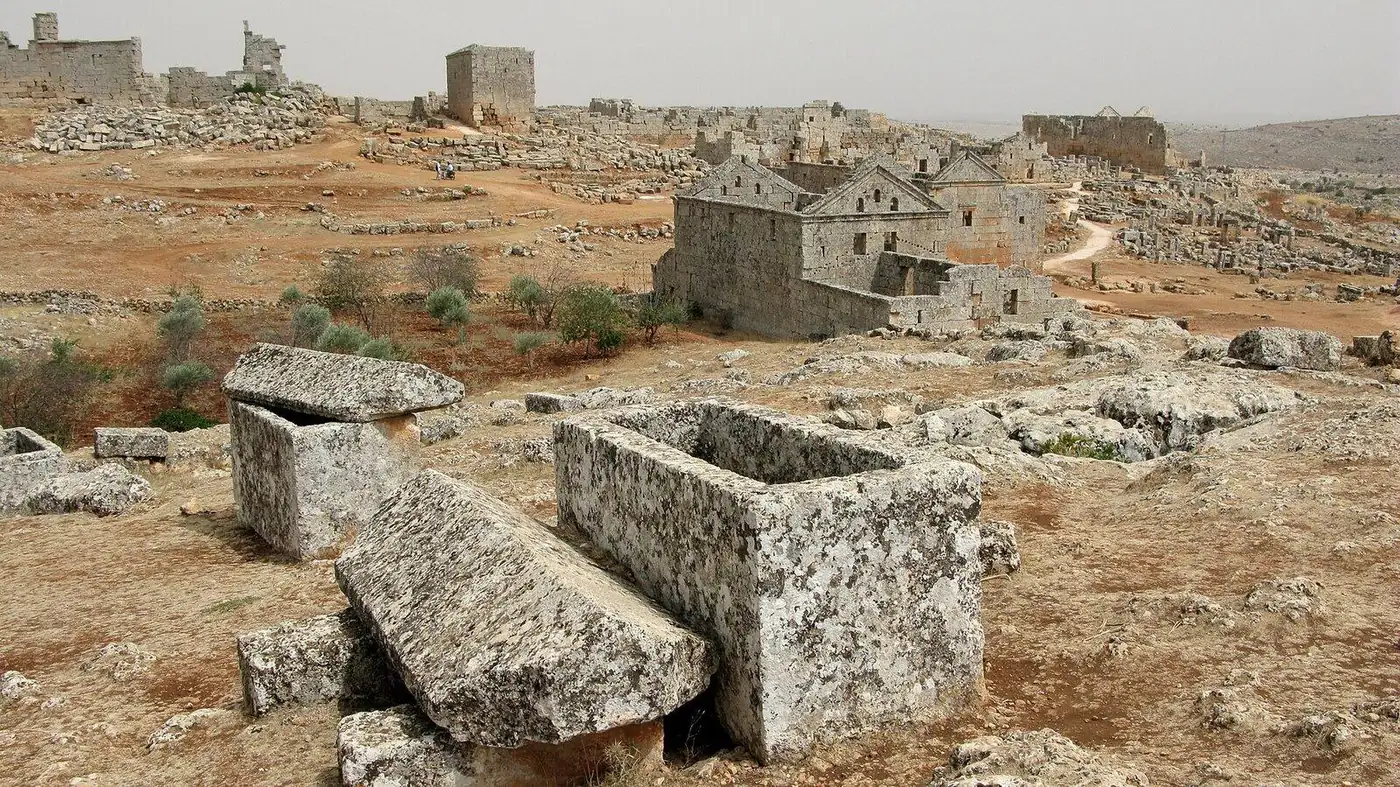
UNESCO World Heritage · 2011 · Idlib & Aleppo Governorates
Ancient Villages of Northern Syria
المدن الميتة
35.9000° N · 36.6000° E“The Dead Cities of the limestone massif.”
- Category
- UNESCO
- Era
- 1st–7th century CE
- Location
- Idlib & Aleppo Governorates
- UNESCO
- Inscribed 2011
Overview
Significance
Notable Features
- Serjilla
- Al-Bara
- Ruweiha
- Deir Sunbul
- Ancient Byzantine churches
- Olive presses & historic trade routes
Major Attractions
Serjilla
The most complete Dead City — a 5th-century village with bath house, andron (men's tavern), church, oil press, and tombs.
Al-Bara
Largest of the Dead Cities, famed for its two pyramid-roofed Christian tombs.
Saint Simeon Stylites Basilica
Octagonal cruciform church around the column of the 5th-century stylite — once one of the largest churches in Christendom.
Mushabbak Basilica
Almost completely preserved late-5th-century church on a hilltop near Aleppo — extraordinary for surviving roofless but otherwise intact.
Ruweiha
Hill-town of villas, churches, and the so-called Tomb of Bizzos.
Visitor Tips
- Most sites are unfenced — bring water, sun protection, and sturdy shoes for sharp limestone underfoot.
- Spring (March–May) gives the limestone a wildflower frame; autumn light is the most photogenic.
- Use Aleppo as a base; consider hiring a guide-driver familiar with the back roads of the massif.
What to Eat Nearby
Zaatar bi-Zeit
Wild thyme, sumac, and sesame in local olive oil — the regional breakfast.
Saj Bread
Hot paper-thin bread off the convex griddle, eaten with olives and labneh.
Picnic Mezze
Most travellers picnic among the ruins — buy cheese, olives, bread, and tomatoes in Aleppo on the way.
Where to Stay
Aleppo base
RecommendedThere are no tourist-grade hotels at the sites themselves — base in Aleppo (Beit Wakil, Mansouriya) and day-trip.
Village home-stays
BasicA handful of families near Al-Bara offer simple home-stays; arrange via a local guide.