“Pearl of the desert, oasis of caravans.”
- Province
- Homs Governorate
- Population
- ~50,000 (Tadmur)
- Climate
- Hot desert; very cold desert nights in winter.
- Best Time
- October–April, when the desert is cool and clear.
Today's weather — Palmyra
Overview
History
Highlights
- Temple of Bel
- Great Colonnade
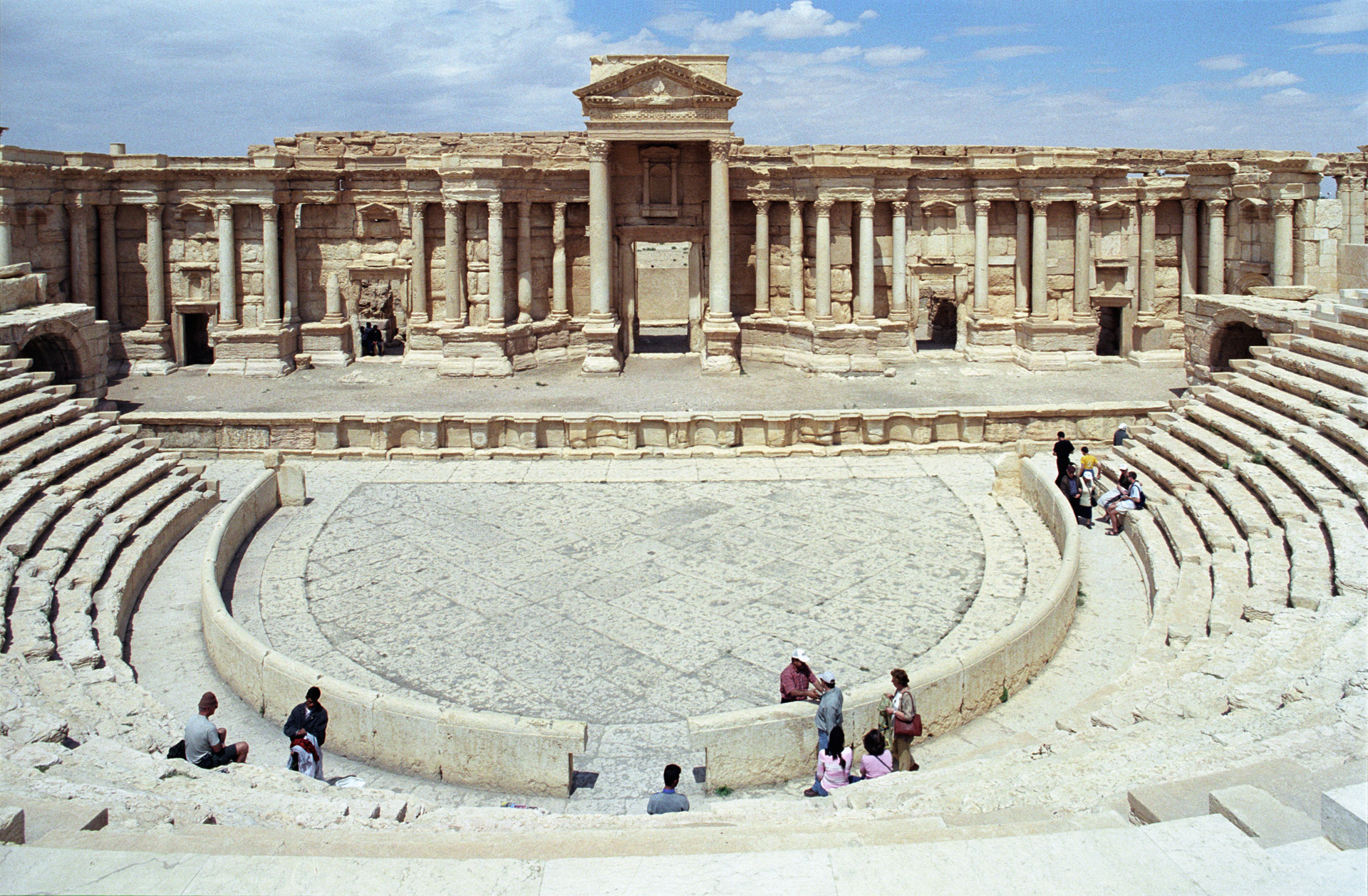
- Roman Theatre
- Valley of the Tombs
- Palmyra Castle (Qala'at Ibn Maan)
- Palmyra Archaeological Museum
Major Attractions
Temple of Bel
The largest religious building of 1st-century CE Roman Syria, dedicated to the Palmyrene supreme god Bel. The cella was destroyed in 2015; the monumental gate survives.
Great Colonnade
A 1.1 km columned avenue that formed Palmyra's main street, lined with bracket statues of leading merchant families on each column shaft.
Roman Theatre
A 2nd-century theatre with an unusually well-preserved scaenae frons opening onto a circular plaza at the heart of the city.
Tetrapylon
A four-pillar monument marking a bend in the colonnade — partially rebuilt after damage.
Valley of the Tombs
Necropolis of multi-storey tower tombs and underground hypogea decorated with painted portraits — the foundation of Palmyrene portrait art.
Qala'at Ibn Maan
A 13th-century Arab castle on the ridge overlooking the ruins — the classic sunset viewpoint over the colonnade.
Palmyra Museum
Houses the surviving funerary busts, mummies of priests, and the Palmyrene tariff inscriptions; partially restored after 2017.
Traveller Tips
- Access to Palmyra has been restricted since 2015 and conditions evolve — always confirm with current advisories and local guides before travel.
- Visit at dawn or dusk for the warm light on the limestone colonnades and to avoid the desert heat.
- Nights are bitterly cold in winter — pack a heavy jacket even in March.
- Bring water from Homs; supplies in Tadmur are limited.
What to Eat
Bedouin Mansaf
Lamb on rice with jameed yogurt sauce — the desert version is fattier and richer than the Hauran's.
Lamb Ouzi
Whole stuffed lamb baked in a sealed clay oven, traditionally served at desert feasts.
Cardamom Coffee
Pale, lightly bitter Bedouin coffee served in small handle-less cups as a welcome gesture.
Dates with Camel Milk
The two staples of desert hospitality, often offered together.
Other local flavours: Bedouin mansaf · Lamb ouzi · Date sweets · Cardamom coffee
Where to Stay
Pre-2011 Heritage Hotels
Currently closedThe famed Zenobia Hotel and Dedeman were the historic options; both were damaged and are not operating regularly.
Homs as a base
Recommended baseMost visitors currently base in Homs (2.5 hr drive) and visit Palmyra as a long day trip when access permits.