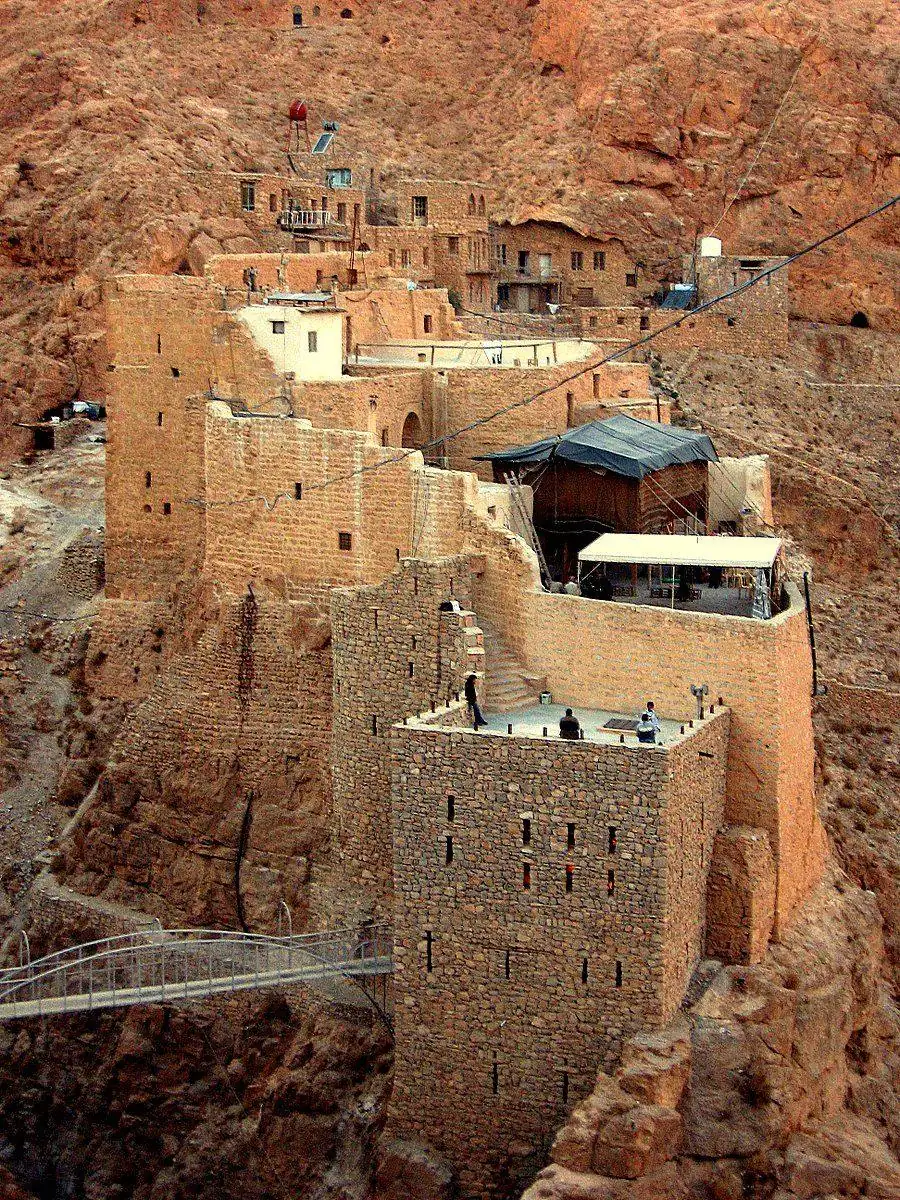
“Gateway to the desert monastery of Mar Musa.”
- Province
- Rif Dimashq Governorate
- Population
- ~40,000
- Climate
- Semi-arid plateau — cold winters, hot dry summers, sharp night cooling.
- Best Time
- March–May and September–November.
Today's weather — Al-Nabk
Overview
History
Highlights
- Deir Mar Musa al-Habashi
- Medieval frescoes of the Last Judgement
- Desert canyon hike and stair climb
- Qalamoun town market
Major Attractions
Deir Mar Musa al-Habashi
Reached by a 350-step climb from the wadi floor, the monastery's small church is covered in vivid frescoes of saints, the Virgin and a full Last Judgement — among the finest surviving medieval paintings in the Middle East.
The wadi and cliffs
A stark desert canyon with hermit caves in the rock walls, silent apart from wind and birds.
Al-Nabk souq
A working provincial market for textiles, sweets and produce — the town's daily life.
Traveller Tips
- The final approach is a stair climb of about 20 minutes with no shade — go early or late and carry water.
- Visitors are welcomed at Mar Musa for a shared meal and prayer; modest dress is required and donations replace fees.
- A 4x4 or taxi from Al-Nabk covers the 17 km desert track to the base of the stairs.
What to Eat
Communal monastery meal
Lentils, bread, olives and tea shared with the community and other guests around a low table.
Dried apricots and qamar al-din
Qalamoun apricot sheets, a staple of the town's markets.
Other local flavours: Monastery lentils · Flatbread · Dried apricots · Bedouin tea
Where to Stay
Deir Mar Musa
Monastery stayGuests may stay overnight on a donation basis in simple dormitories — book ahead by phone.
Al-Nabk hotels
BudgetBasic highway hotels in town for travellers not staying at the monastery.